I remember the first time a customer asked me about thermal spray technology1. They looked confused by all the different processes. I realized this confusion is common in our industry.
Thermal spray technology is a coating process that melts or heats materials and propels them onto a surface at high velocity to create a protective or functional layer. The five main types are HVOF (High Velocity Oxygen Fuel)2, plasma spray3, arc spray4, flame spray5, and cold spray6.
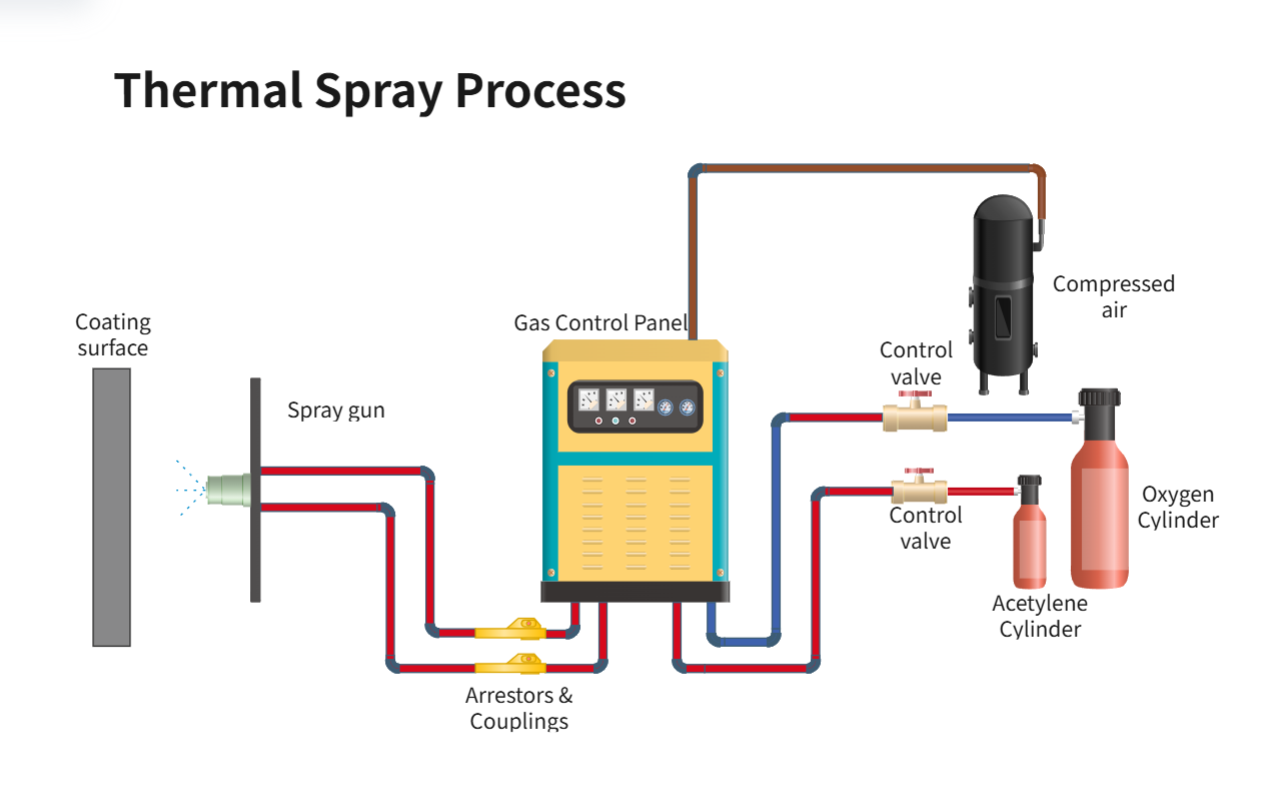
Each process has unique characteristics. The key difference lies in how much thermal energy7 and kinetic energy8 they deliver to spray particles. I have worked with these technologies for over 15 years at our company. Let me share what I learned about each method.
What Makes HVOF Different from Other Thermal Spray Processes?
HVOF creates some of the densest coatings I have ever seen. The process uses a combustion chamber9 to generate extremely high particle velocities10. This combination produces exceptional results.
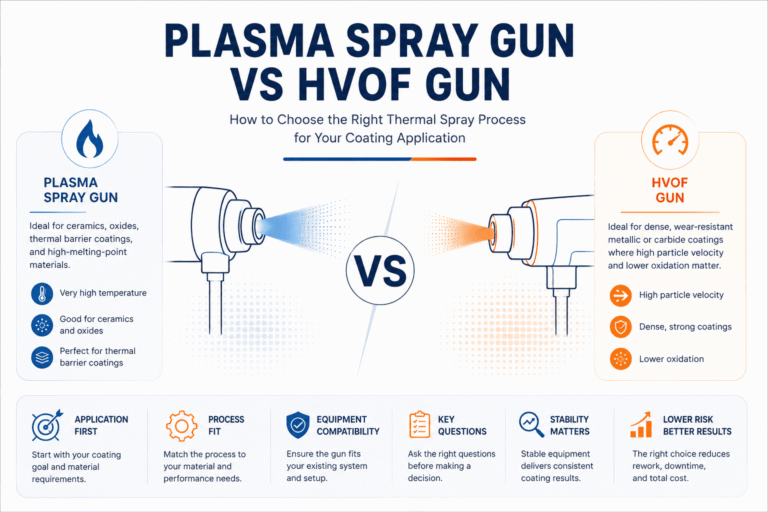
HVOF (High Velocity Oxygen Fuel)2 spraying achieves particle velocities up to 800 m/s with relatively moderate temperatures around 3000°C. This high kinetic energy and controlled thermal energy produces dense, hard coatings with minimal oxidation11, making it ideal for tungsten carbide12 and other wear-resistant materials.
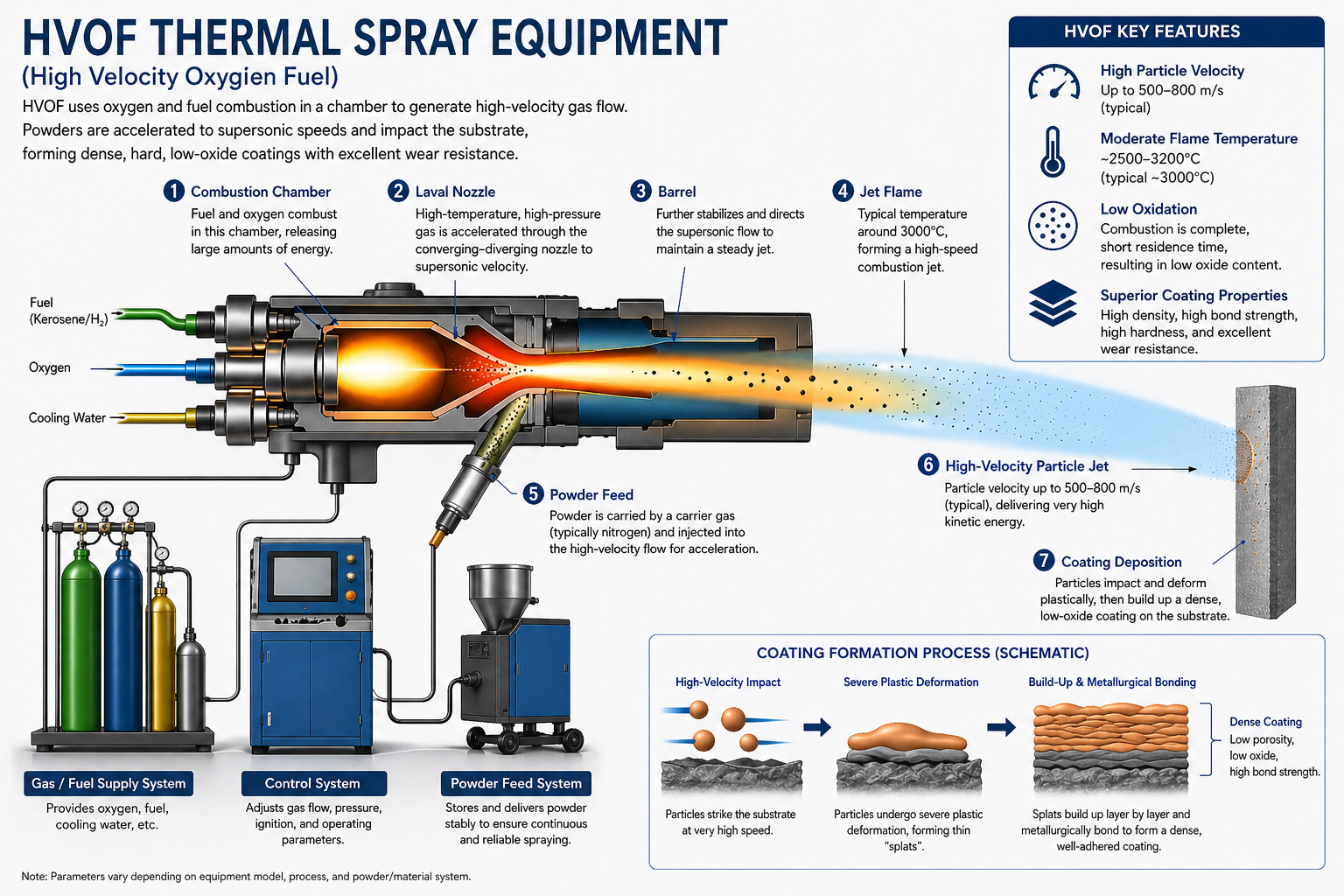
The HVOF process works through a specific mechanism. Fuel and oxygen mix in the combustion chamber9. The mixture ignites and creates a supersonic jet. Powder particles enter this jet stream. The high velocity compacts the particles tightly on the substrate.
We manufacture HVOF components at our facility using dual-spindle CNC machines. Our precision reaches 0.01mm tolerance. The gun barrel and combustion chamber require this accuracy. Even small deviations affect coating quality.
| HVOF Characteristic | Value | Impact on Coating |
|---|---|---|
| Particle Velocity | 600-800 m/s | High density, low porosity |
| Flame Temperature | 2700-3000°C | Minimal oxidation |
| Coating Porosity | <1% | Excellent wear resistance |
| Bond Strength | >70 MPa | Superior adhesion |
The relationship between kinetic energy and coating properties fascinates me. Higher velocity means better particle deformation. This creates mechanical interlocking. The coating bonds stronger to the substrate. We see this clearly when testing our METCO-compatible gun barrels.
HVOF excels with carbide materials. Tungsten carbide coatings maintain their hardness. The moderate temperature prevents carbide decomposition. Other processes often overheat these materials. I have seen many failed coatings from improper temperature control.
How Does Plasma Spray Technology Achieve Ultra-High Temperatures?
Plasma spray reaches temperatures that seem impossible. The process creates a fourth state of matter. This extreme heat opens new possibilities for coating materials.
Plasma spray technology generates temperatures between 8000-15000°C by passing gas through an electric arc between a tungsten cathode and copper anode. This ultra-high temperature makes it the only thermal spray method capable of melting high-melting-point ceramics like zirconia and alumina.
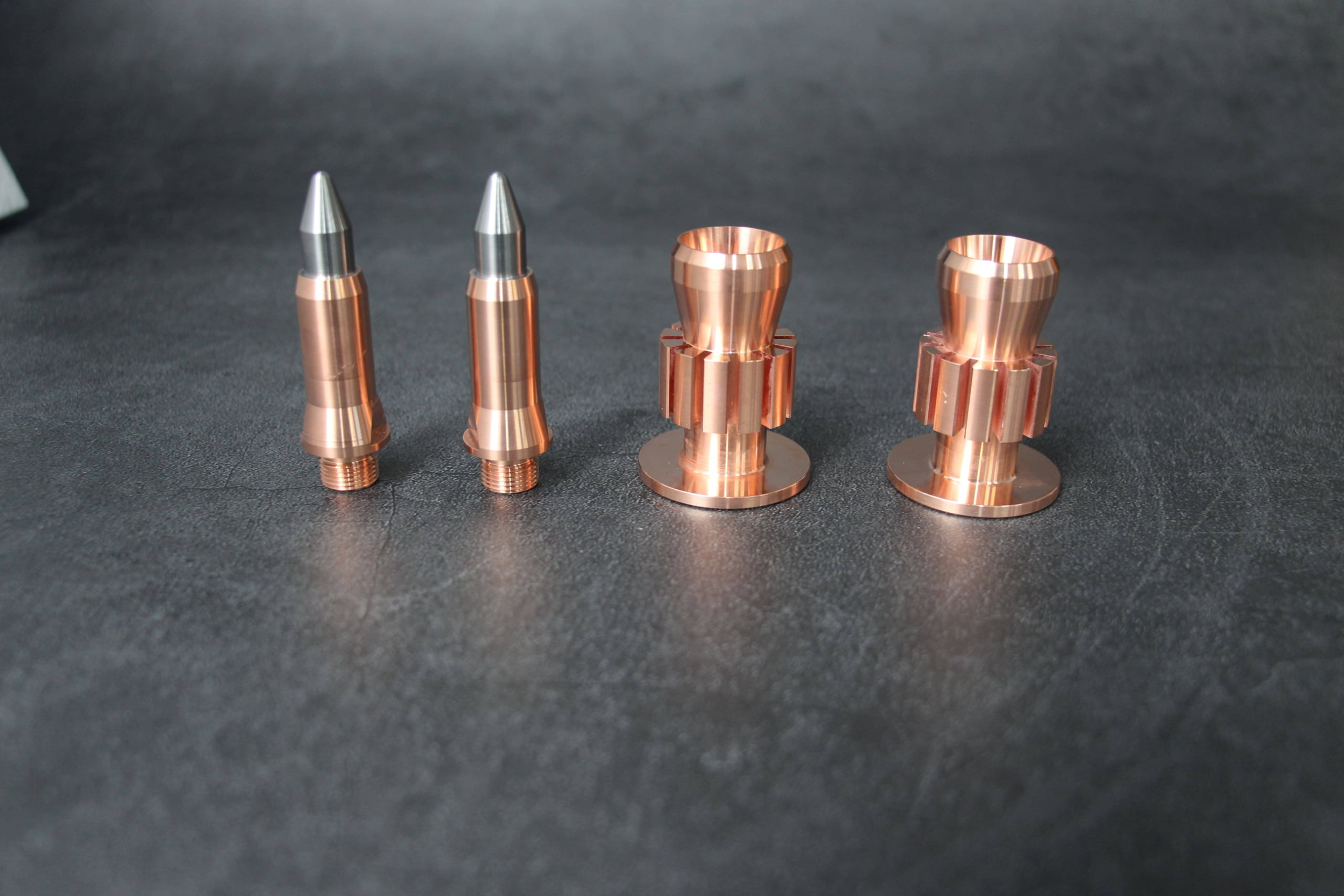
The plasma arc13 starts when electrical current flows between electrodes. We use non-thoriated tungsten cathodes in our ARCTHERM products. These cathodes have low work function electron emitters. They perform as well as thoriated versions but without radioactivity concerns.
The gas ionization creates plasma. Common gases include argon, nitrogen, or hydrogen. Each gas affects the plasma characteristics differently. Argon provides stability. Hydrogen increases heat transfer. We often blend gases for optimal results.
Our gap-free connection technology improves cathode-anode assembly. Traditional methods leave microscopic gaps. These gaps cause electrical resistance. Heat builds up unevenly. Our connection eliminates this problem. The cathodes last significantly longer.
| Plasma Spray Parameter | Range | Application |
|---|---|---|
| Arc Temperature | 8000-15000°C | Ceramic melting |
| Particle Velocity | 200-400 m/s | Moderate density |
| Standoff Distance | 75-150 mm | Coating thickness control |
| Power Input | 40-80 kW | Material melting capacity |
The high thermal energy7 suits specific materials. Ceramics need this heat to melt completely. Zirconia melts around 2700°C. Alumina melts around 2050°C. No other process reliably melts these materials. The plasma temperature provides a comfortable margin.
I notice customers often confuse thermal energy with kinetic energy. Plasma spray prioritizes heat over velocity. The particles move slower than HVOF. This creates different coating characteristics. Plasma coatings have slightly higher porosity. But they handle ceramic materials that HVOF cannot process.
The relationship between process parameters and coating quality requires careful control. We test every plasma gun body before shipping. The arc length must be consistent. Arc stability affects coating uniformity. Our quality checks include 100% functional testing.
What Are the Advantages of Arc Spray for Large-Scale Applications?
Arc spray surprises people with its simplicity. Two wires create the coating material. No powder handling. No complex fuel systems. Just electricity and compressed air.
Arc spray (also called twin wire arc spray14 or TWAS) melts two electrically charged wires at their intersection point and uses compressed air to atomize and propel the molten material. This process offers the highest deposition rates15 (up to 50 kg/hour) and lowest operating costs among thermal spray methods.
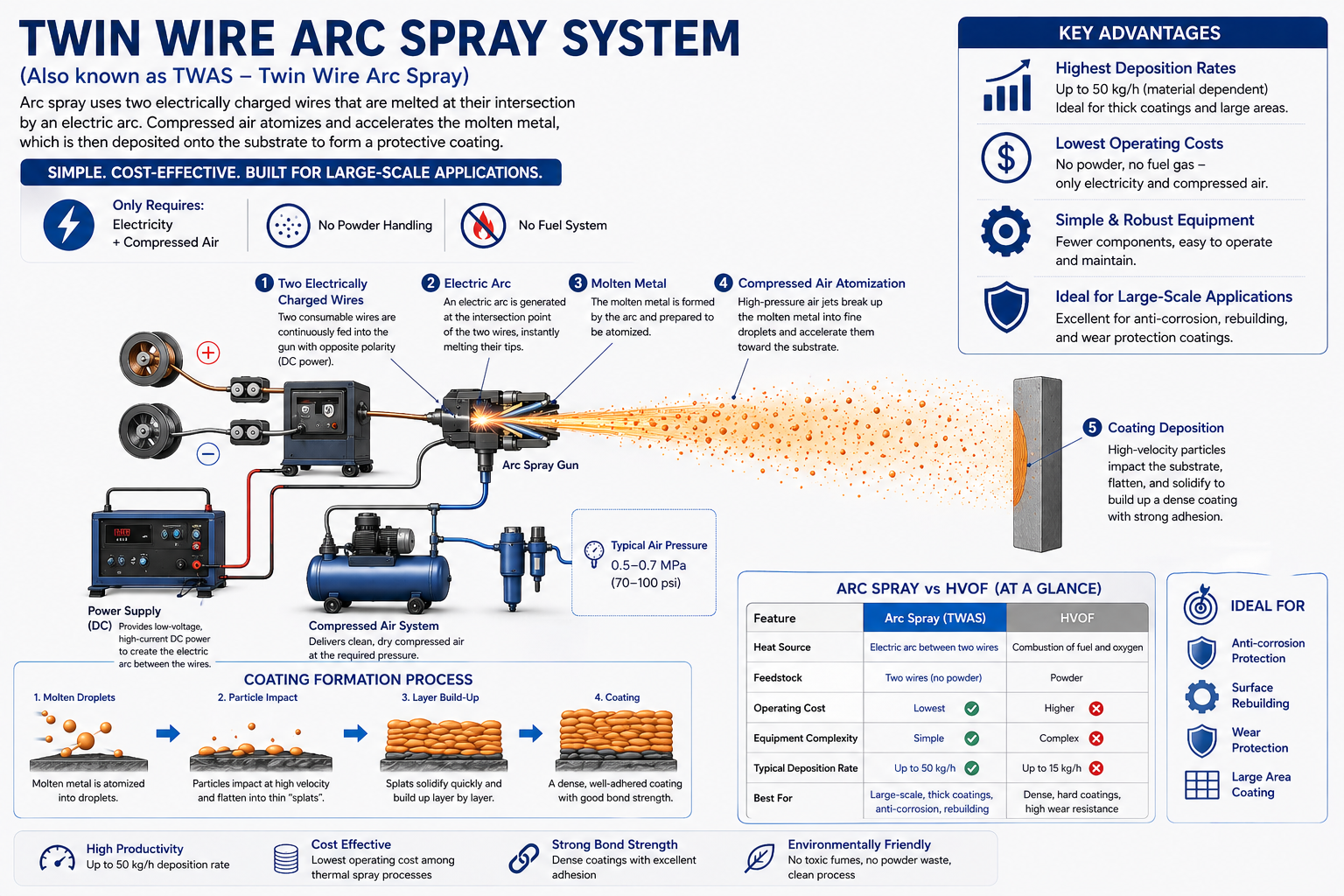
The process mechanics are straightforward. Two conductive wires feed toward each other. They meet at a specific angle. Electric current passes through both wires. The tips melt when they touch. Compressed air blasts the molten metal toward the substrate.
Arc spray works best with conductive materials. Aluminum, zinc, and stainless steel are common. We cannot spray ceramics or carbides with this method. The materials must conduct electricity to complete the circuit.
The deposition rate impresses everyone. I have seen arc spray coat large structures in hours. Other methods would take days. The efficiency comes from continuous wire feeding. No start-stop cycles like powder spray. The process runs steadily.
| Arc Spray Feature | Specification | Benefit |
|---|---|---|
| Deposition Rate | 15-50 kg/hour | Fast coverage |
| Operating Cost | Lowest | Economic for large areas |
| Wire Diameter | 1.6-3.2 mm | Easy material handling |
| Spray Distance | 100-200 mm | Flexible positioning |
Cost analysis favors arc spray4 for many projects. Wire costs less than powder. The equipment is simpler. Maintenance requirements are minimal. Energy consumption stays low. These factors add up significantly on large jobs.
The coating properties differ from HVOF or plasma. Arc spray coatings have higher porosity, typically 5-15%. The particle velocity is moderate, around 100-200 m/s. Bond strength is good but not exceptional. These characteristics suit protective coatings rather than high-performance applications.
I recommend arc spray for corrosion protection. Zinc coatings on steel structures work excellently. The coating provides sacrificial protection. Small pores actually help. They allow zinc to corrode preferentially. The steel underneath stays protected.
When Should You Choose Flame Spray Over Other Methods?
Flame spray is the original thermal spray process. It has been around for over 100 years. Despite newer technologies, flame spray still serves important purposes. The simplicity and flexibility matter in certain situations.
Flame spray uses an oxy-fuel flame (typically oxygen and acetylene or propane) to melt powder or wire materials at temperatures around 2500-3000°C. This method offers the most portable and cost-effective solution for field repairs and maintenance coating applications.
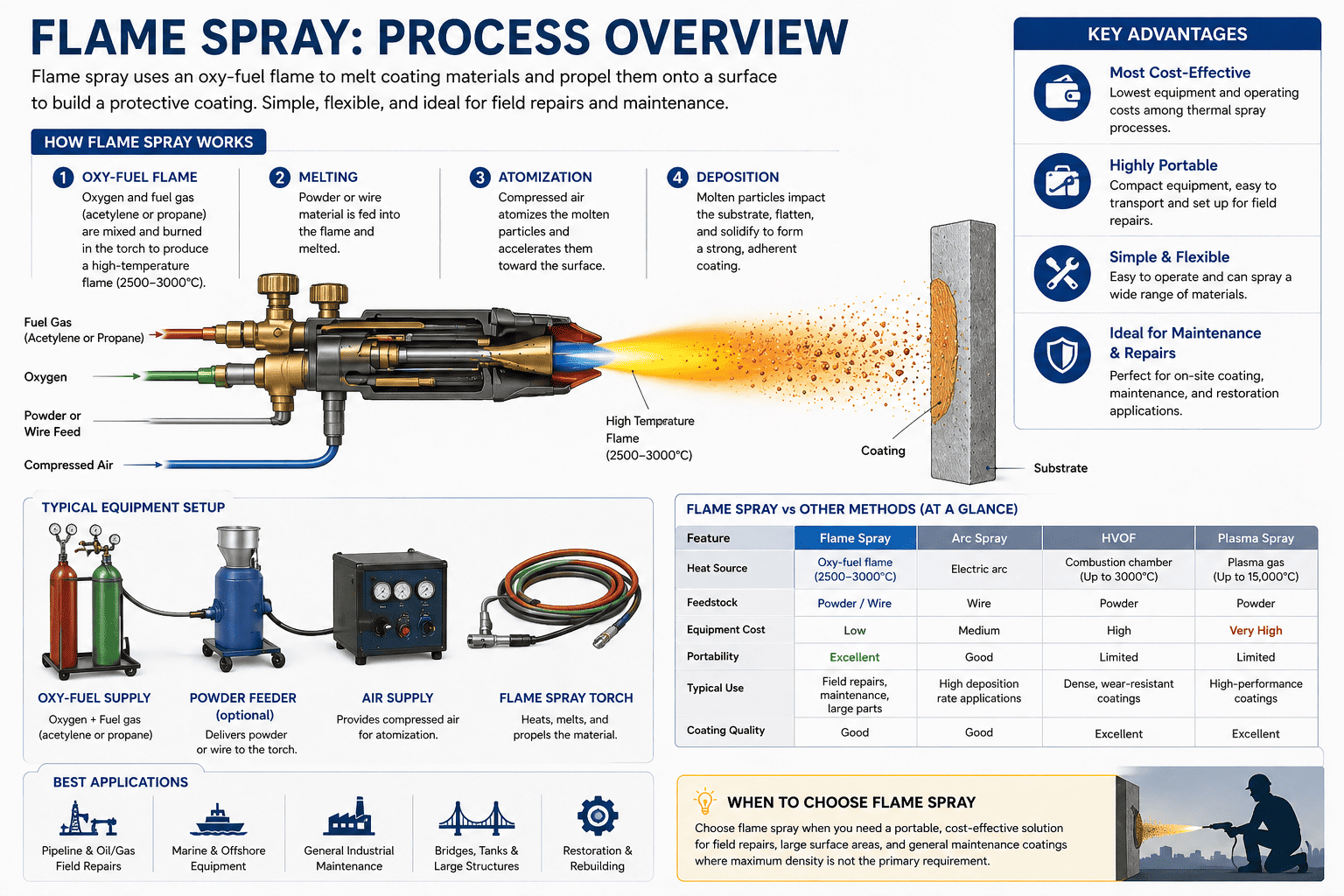
The flame spray5 torch mixes fuel with oxygen. Combustion creates the heat. Powder enters the flame stream through a carrier gas. The particles melt in the flame. They hit the surface and form a coating. Wire flame spray works similarly but feeds wire instead of powder.
Equipment portability makes flame spray valuable. A complete system fits in a van. Technicians can spray on-site. This matters for repair work. Moving large components to a spray booth is expensive. Sometimes it is impossible.
The temperature range limits material choices. Flame spray handles most metals and some ceramics. High-melting-point ceramics are problematic. The flame cannot melt them completely. Partially melted particles create weak coatings.
| Flame Spray Aspect | Details | Use Case |
|---|---|---|
| Flame Temperature | 2500-3000°C | General purpose coating |
| Particle Velocity | 40-100 m/s | Lower density coatings |
| Equipment Weight | 5-15 kg | Portable field work |
| Setup Time | 10-20 minutes | Quick deployment |
I see flame spray used extensively for bearing journals. Worn shafts need buildup. Flame spray adds material quickly. The coating can be machined to final dimensions. This repair costs far less than replacing the shaft.
The relationship between flame spray and other processes shows interesting trade-offs. Flame spray produces lower quality coatings than HVOF or plasma. The porosity is higher, typically 10-20%. Bond strength is moderate. But the process costs much less. Setup is faster. Equipment is simpler.
Our company supports flame spray applications through compatible consumables. We manufacture nozzles and powder feeders. The precision matters even in this basic process. Consistent powder flow creates better coatings. Our CNC machining ensures accurate dimensions.
How Does Cold Spray Work Without Melting the Material?
Cold spray challenges our assumptions about thermal spray. The name itself seems contradictory. How can you spray without heat? The answer reveals fascinating physics.
Cold spray accelerates powder particles to supersonic velocities16 (500-1200 m/s) using high-pressure gas expansion, without melting the material. Particles bond through high-velocity impact and plastic deformation17 at temperatures well below the melting point, preserving the original material properties.
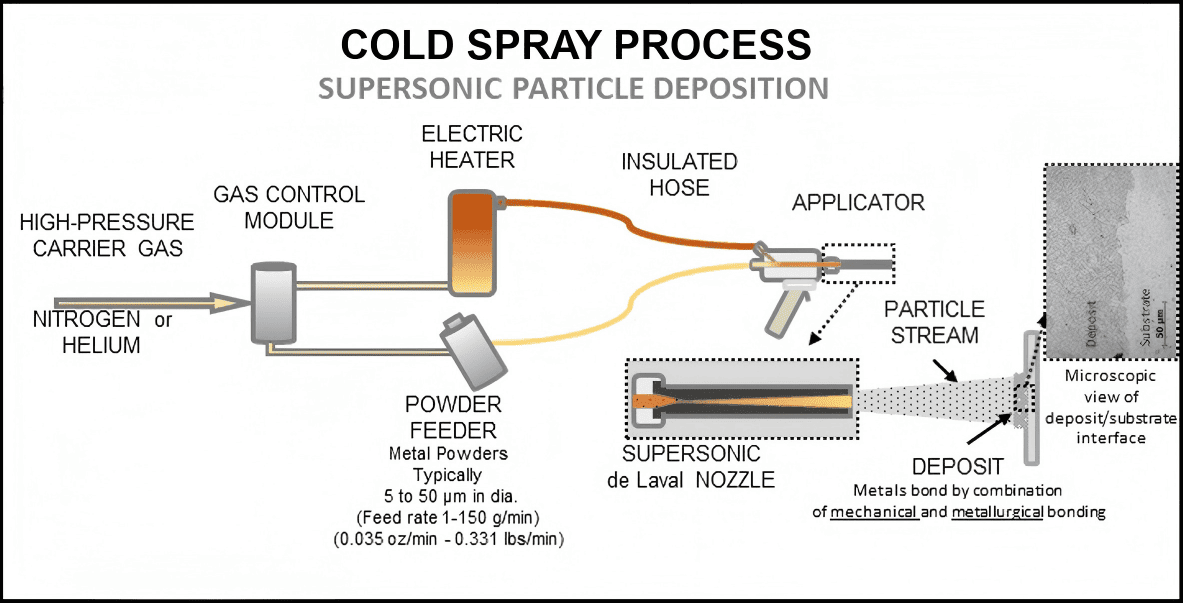
The process uses a converging-diverging nozzle. High-pressure gas (typically nitrogen or helium) flows through the nozzle. The gas accelerates to supersonic speeds. Powder particles entrained in the gas reach extreme velocities. They hit the substrate with tremendous kinetic energy8.
The bonding mechanism differs completely from other thermal spray methods. Particles do not melt. Instead, they deform plastically upon impact. The high velocity creates localized pressure and temperature at the impact point. This causes atomic-level bonding. The bulk material stays cool.
Cold spray preserves material properties that heat would destroy. Oxidation does not occur. Phase transformations do not happen. Grain structure remains unchanged. This matters enormously for certain materials.
| Cold Spray Parameter | Range | Significance |
|---|---|---|
| Particle Velocity | 500-1200 m/s | Bonding mechanism |
| Gas Pressure | 1-5 MPa | Velocity generation |
| Gas Temperature | 200-800°C | Below melting point |
| Deposition Efficiency | 60-95% | Material utilization |
I find cold spray particularly interesting for oxygen-sensitive materials. Titanium oxidizes rapidly when heated. Aluminum forms oxide layers. Copper loses conductivity. Cold spray avoids these problems. The coating retains the base material properties.
The relationship between particle velocity and bonding efficiency is critical. Each material has a critical velocity. Below this velocity, particles bounce off. Above it, they bond. Copper bonds around 500 m/s. Titanium needs 700 m/s. Aluminum requires 600 m/s. We must match gas pressure and temperature to achieve these velocities.
Our experience shows cold spray6 growing in importance. Additive manufacturing applications emerge. Repair of heat-sensitive components becomes possible. Electrical conductivity coatings maintain performance. The technology is younger than other methods but developing rapidly.
Conclusion
Each thermal spray technology serves specific purposes based on its unique combination of thermal and kinetic energy. Understanding these differences helps you select the right process for your application needs.
Learn the fundamentals of this versatile coating process that transforms materials into protective and functional surface layers. ↩
Discover why HVOF produces the densest coatings with exceptional wear resistance and minimal oxidation for critical applications. ↩
Explore the science behind plasma spray's ability to melt high-temperature ceramics that other processes cannot handle. ↩
Find out why arc spray offers the highest deposition rates and lowest operating costs for extensive surface coverage projects. ↩
Learn about the most portable and cost-effective thermal spray solution perfect for field repairs and maintenance work. ↩
Understand this revolutionary process that preserves material properties while creating strong bonds through high-velocity impact. ↩
Learn how heat input affects material melting, particle behavior, and final coating properties in different spray processes. ↩
Discover how particle impact energy affects coating density, adhesion, and mechanical properties in thermal spray processes. ↩
Explore how combustion chamber engineering affects particle acceleration and coating quality in HVOF applications. ↩
Learn the critical relationship between particle speed and coating density, adhesion, and overall performance characteristics. ↩
Understand how different thermal spray processes control oxidation to maintain coating integrity and material properties. ↩
Discover why tungsten carbide is the go-to material for extreme wear resistance in industrial coating applications. ↩
Understand the physics behind plasma formation and how it enables ultra-high temperature coating applications. ↩
Learn about this efficient coating method that eliminates powder handling while achieving high deposition rates. ↩
Compare coating application speeds to choose the most efficient process for your production requirements and timelines. ↩
Explore the engineering behind achieving extreme particle speeds that enable superior coating formation and bonding. ↩
Discover the unique bonding mechanism that allows cold spray to create strong coatings without melting materials. ↩